The outbreak of the Problem
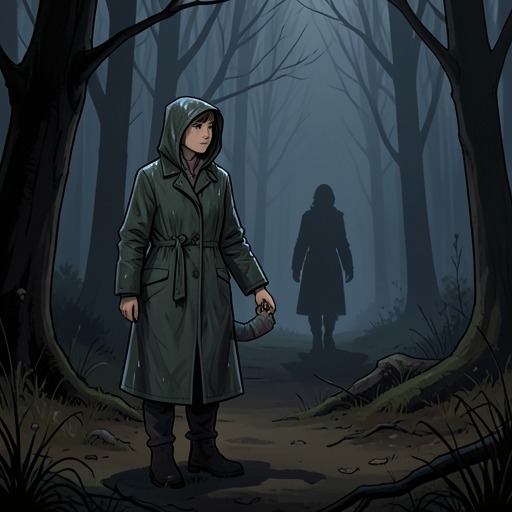
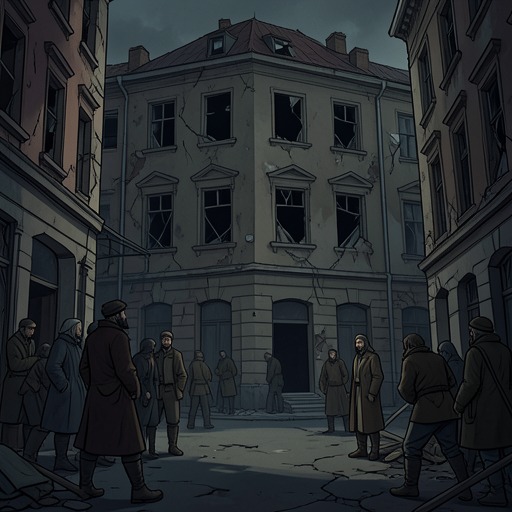
Bird BoxThe outbreak of the Problem is the global catastrophe that dismantles ordinary life after people begin seeing an unknown presence and then harm themselves or others. Its decisive force lies not in an explanation of what the presence is—the evidence never supplies one—but in the way uncertainty reorganizes daily life, public authority, infrastructure, and human contact around the need not to look.
Reports and Recognition
Early reports reach Malorie through the Internet and news. One story, called the Russia Report, describes an incident on a snowy highway outside St. Petersburg: a passenger asks the truck’s driver to stop, attacks him, and later dies by suicide. Further accounts come from Yakutsk and Omsk. The incidents differ in their circumstances, but each enlarges the disturbing possibility that apparently ordinary people can suddenly act with extreme violence and turn it upon themselves.
The Omsk report includes video. Malorie watches for as long as she can as a man with an axe pursues the person filming; she does not watch the outcome. Shannon continues to bring news into the house, while Malorie tries not to follow the subject. The contrast between the growing public record and Malorie’s impulse to look away establishes a pattern that will govern survival: information about the crisis is necessary, but visual access to its apparent cause may itself be dangerous.
By the time Malorie is pregnant, reports have become more frequent. What once seemed to break twice a week now develops daily, and the news and online discussion revolve around the unexplained events. A website marks affected cities on a global map with red faces; Malorie remembers seeing more than three hundred. Online discussion names the phenomenon the Problem and circulates a shared belief that it begins when someone sees something. She resists that interpretation, arguing with Shannon and relying on pages that dismiss the events as mass hysteria. Her skepticism weakens when the same pages begin reporting cases among the writers’ own loved ones.
Emergency Rules and Social Breakdown
As the crisis spreads, the television reports events from across the United States, while the government issues instructions for a population unable to establish what is happening. A national curfew is mandated. People are told to lock doors, cover windows, and avoid looking outside. Television repeatedly reports suicides, cycling through euphemisms for self-destruction; radio programming gives way to discussion of the crisis. Malorie understands these measures as a shutdown of the outdoors, but they offer precautions rather than an explanation or a way to restore ordinary public life.
The threat reaches into private decisions before its cause is known. Malorie wants to drive north to Michigan, but Shannon argues that travel is too dangerous, even for a trip to the store. They have no reliable way to confirm that family members elsewhere are safe. The crisis thus turns distance into a practical danger: roads and movement can no longer be treated as ordinary means of reaching people.
The sisters’ household makes the shift from public emergency to domestic discipline visible. Windows are covered with blankets, and the front door is neither left open nor unlocked. Malorie initially doubts that the reports establish a real shared threat; the accumulating accounts, including stories from people she had considered skeptics, alter her assessment without resolving the mystery. The Problem is defined by that imbalance: the warning becomes credible before its cause becomes intelligible.
Infrastructure Under Pressure
At the Riverbridge house, the breakdown is measured through the systems that no longer connect people to the wider world. Tom tells Malorie that there is no Internet, mail, or newspaper, and that the group’s cell phones stopped working weeks earlier. The landline still works, but its usefulness is uncertain because the people they might call may be unreachable. A house that once depended on ordinary communication is now cut off from information and from any dependable public response.
Electricity persists for a different reason. Tom explains that the local power plant is hydroelectric and may continue operating if its gates were left in a suitable position. The river behind the house therefore offers a conditional source of power, not a guarantee that the old system remains intact. Running water has already failed. Residents draw water from a well, use buckets rather than indoor plumbing, and carry waste to latrines dug in the woods; these tasks must be done blindfolded. The river is both a potential source of survival and a reminder that daily life now depends on improvised routines rather than functioning services.
The pressure of scarcity forces decisions under uncertainty. When Felix’s buckets of water remain untouched and the housemates have gone a day without drinking, Tom offers to drink the river water because he is thirsty, rejecting Don’s framing of the act as a bid to be a champion. The episode does not turn uncertainty into certainty; it shows the group weighing immediate need against an unknown hazard. Likewise, when exposed ground raises the possibility that creatures could enter the house, Tom reasons that if they could easily break in, they would already have done so. The group’s judgments are necessarily provisional because it has no reliable account of the creatures or their capacities.
New Rules and Unequal Responses
The crisis produces local rules where national instructions and services cease to be enough. At the Riverbridge house, the need to remain blindfolded governs even mundane chores. At the door, Don stops Felix from opening it casually and insists that they cannot simply admit someone without considering the danger. Later, when Tom proposes deciding by vote whether to open the door, Don objects that one person’s refusal should be enough to keep it closed. Their dispute makes the household’s improvised authority explicit: collective survival depends on procedures, but even the procedures are contested.
The outbreak also sharpens disagreements about what can be inferred from animal behavior and human reason. Olympia wonders whether animals might be unable to go mad because their brains are too small. Tom treats the possibility as an open question, suggesting that the effects may depend on a creature’s capacity to lose its mind and may vary in degree. Don wants to know more before anyone ventures outside. Their discussion provides no answer; instead, it shows how little the survivors can safely generalize from what they have seen.
Later, Gary asks whether the house he came from had electricity, showing how the question of surviving infrastructure remains part of life even after people have reached shelter. Much later, Rick’s community can offer a more organized alternative: it grows its own food and has chickens, a cow, and goats, with hopes of expanding into a small farm. The contrast is not a restoration of the old world but an adaptation to its collapse. Survival increasingly rests on bounded communities, practical knowledge, and resources they can maintain themselves.
Significance
The Problem never receives a confirmed cause or a settled explanation in the evidence presented here. Its defining rule is reported rather than proven: people believe that seeing something initiates the catastrophe, and that belief is strong enough to change how they travel, communicate, admit strangers, and perform basic household tasks. The unknown remains outside the covered windows, while its consequences become concrete inside them.
The collapse unfolds through both sudden incidents and gradual failures. News of deaths arrives abruptly; communications, water service, transport, and trust disappear or become unreliable in stages. This combination makes the disaster more than an encounter with an unseen threat. It is also a crisis of knowledge and infrastructure, in which people must make consequential choices without dependable information, while the systems that once made information and daily necessities available fall away.
The later possibility of a self-sustaining community gives the outbreak a limited, practical counterpoint: food can be grown and animals raised, even though the larger crisis remains unresolved. The central change is not that survivors learn what the Problem is, but that they learn to arrange life around what they cannot safely know. The title names the catastrophe, but also the condition that makes it so difficult to confront: seeing may be fatal, and not seeing leaves every judgment incomplete.